
Managing a sheltered or independent living scheme involves responsibilities that go beyond standard property maintenance. The people who live there are often elderly, vulnerable, or living with health conditions that make the standard of their shared environment a matter of genuine wellbeing, not just appearance. When communal cleaning services fall short in a sheltered scheme, the consequences are more serious than in a standard residential block or commercial building.
This guide covers what professional communal cleaning services for sheltered and independent living schemes involve, why sheltered housing cleaning requires a different approach to standard residential cleaning, and what scheme managers and housing officers should look for when choosing a sheltered accommodation cleaning contractor.
What Does Communal Cleaning in a Sheltered Housing Scheme Include?
Communal area cleaning services in a sheltered or independent living setting cover every shared space that residents use on a daily basis. These typically include:
Communal corridor cleaning. Corridors in sheltered schemes carry heavy daily footfall from residents, staff, visitors, and delivery personnel. Floors must be maintained to a consistent standard with particular attention to slip hazards, especially in wet weather when moisture is brought in from outside. Skirting boards, handrails, door handles, and notice boards should be cleaned regularly as part of the corridor schedule.
Communal lounge cleaning. Shared lounges are social spaces that residents use throughout the day. Soft furnishings, hard surfaces, window sills, and flooring all require regular attention. Because residents spend significant time in these spaces, the standard of finish matters more than in an area that people simply pass through.
Communal stair cleaning. Where schemes have multiple floors, staircases and landings need regular cleaning and monitoring for safety hazards. Handrails are high-touch surfaces that require disinfection, not just wiping.
Entrance areas and lift lobbies. First impressions matter to residents, their families, and visitors. Entrance mats, door glass, lift buttons, and lobby areas set the tone for the whole scheme and should be included in the daily cleaning schedule.
Laundry rooms and utility areas. Where shared laundry facilities exist, these require their own cleaning frequency, including machine exteriors, surfaces, floors, and waste bins.
Communal kitchens and dining areas. Any shared catering or dining provision requires cleaning to food hygiene standards, including surfaces, equipment, floors, and waste management.
Bin stores and external areas. Communal bin stores, car parks, and external pathways should be included in the cleaning and maintenance programme, with pressure washing scheduled periodically for hard surfaces.
Why Sheltered Housing Cleaning Requires a Different Approach
Standard communal area cleaning services designed for general residential blocks are not always appropriate for sheltered and independent living schemes. Several factors make this environment distinct.
Residents are present throughout the day. In a standard apartment block, most residents are out during working hours. In a sheltered scheme, many residents are home all day. Cleaning must be carried out with awareness that vulnerable people are nearby, that noise and disruption should be minimised, and that wet floors create a real fall risk for elderly residents.
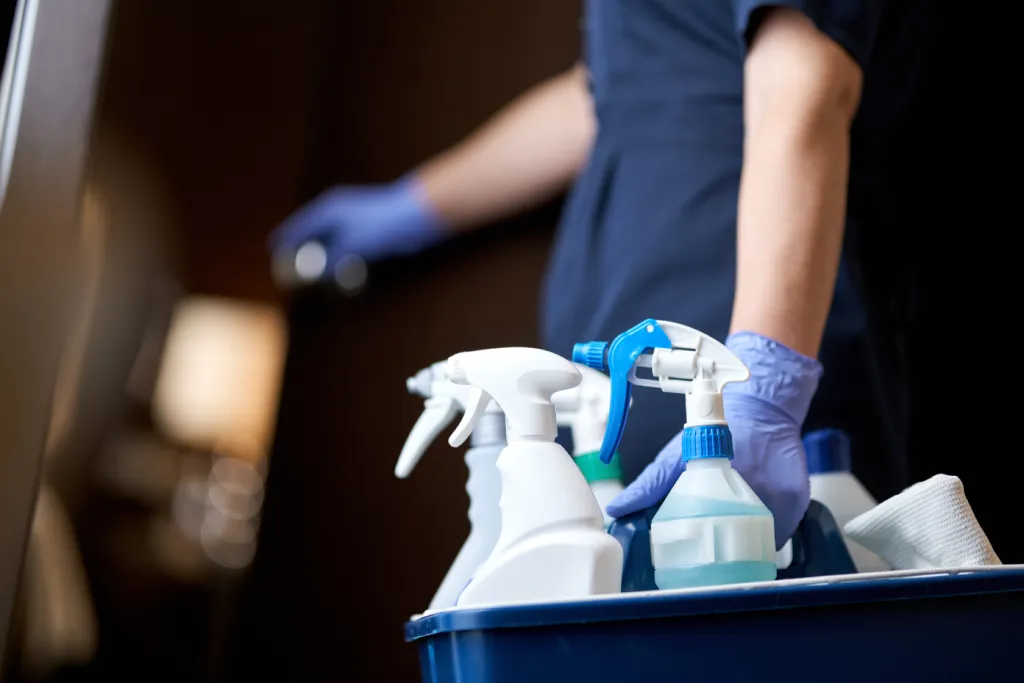
Infection control carries greater weight. Older and vulnerable residents are more susceptible to respiratory infections, gastrointestinal illness, and other communicable conditions. A cleaning regime that might be adequate in a standard residential setting may not provide sufficient infection control in a sheltered scheme, particularly during winter months when flu and other seasonal illnesses circulate. Cross-contamination between areas must be managed carefully through colour-coded equipment and documented cleaning protocols.
Staff need to be the right fit. Cleaning operatives working in sheltered and independent living schemes are working in an environment where residents live. They need to be discreet, respectful, and appropriately vetted. DBS checks are standard for staff working in these environments, and the interpersonal dimension of the role matters in a way that it does not in a commercial office.
Coordination with the scheme manager is essential. Unlike a commercial premises where cleaning largely happens independently, independent living cleaning services work best when there is a clear relationship between the cleaning contractor and the scheme manager. Incidents, changes in resident needs, or specific hygiene concerns need to be communicated promptly, and the contractor needs to be responsive.
What Should a Sheltered Housing Cleaning Contract Include?
A well-structured contract for communal cleaning services in a sheltered or independent living setting should clearly cover the following.
A written scope of work. Every area to be cleaned, the tasks to be carried out in each area, and the frequency should be documented in writing before the contract begins. Vague terms such as “general communal cleaning” are not sufficient.
DBS requirements. The contract should confirm that all cleaning operatives working on site have undergone the appropriate level of Disclosure and Barring Service check.
Infection control protocols. The contract should confirm how cross-contamination is prevented, including colour-coded cleaning equipment, product specifications, and any enhanced protocols during periods of heightened infection risk.
Emergency and responsive cleaning provisions. The contract should confirm response times for urgent cleaning needs and what the escalation process is for incidents outside of the regular schedule.
Quality assurance and reporting. Regular site inspections, documented visit records, and a clear process for raising concerns should all be specified. For sheltered schemes in England, the expectations of the Housing Ombudsman Service around property management standards are relevant context for any scheme manager reviewing their contractor arrangements.
COSHH compliance. All cleaning products used on site must comply with the Control of Substances Hazardous to Health (COSHH) regulations. This is particularly important in sheltered housing where residents with respiratory conditions or chemical sensitivities may be affected by product choices.
Notice periods and exit terms. Both parties should have clearly defined notice periods, and the exit terms should be broadly symmetrical.
How Often Should Communal Areas Be Cleaned in a Sheltered Scheme?
The right frequency depends on the size of the scheme, the number of residents, and the range of communal facilities available. As a general guide:
Daily cleaning should cover entrance areas, communal corridors, lift lobbies, and any shared facilities in regular use such as lounges, laundry rooms, and dining areas. High-touch surfaces including door handles, handrails, and lift buttons should be disinfected daily as a minimum.
Weekly cleaning should address less frequently used spaces, deep cleaning of communal lounges, bin store maintenance, and any areas with lighter day-to-day traffic.
Periodic deep cleaning, typically monthly or quarterly, should cover floor treatments, high-level dusting, external pressure washing, and any specialist cleaning tasks not covered in the regular schedule.
Responsive cleaning is also important in a sheltered scheme. Accidents, spillages, and incidents occur, and the cleaning contractor should have the capacity to respond quickly when they do.
Why Autumn and Winter Make Communal Cleaning More Critical in Sheltered Schemes
As temperatures drop and residents spend more time indoors, the shared spaces of a sheltered or independent living scheme carry a greater infection risk than at any other point in the year. Flu, respiratory syncytial virus (RSV), norovirus, and other seasonal illnesses spread readily through shared surfaces and enclosed spaces, and the residents of sheltered schemes are among the groups most at risk from serious complications.
This makes the period from October through to March the most important window for communal area cleaning services to be operating at their highest standard. Cleaning frequencies may need to increase. Enhanced disinfection of high-touch surfaces should be in place. And the cleaning contractor should be proactive in communicating with the scheme manager if anything changes.
Scheme managers reviewing their current cleaning arrangements before winter sets in are making the right call. The cost of inadequate communal cleaning in a sheltered scheme is not just reputational. It has a direct impact on resident health.
Carter & Faraday: Communal Cleaning Services for Sheltered and Independent Living Schemes Across Surrey and Sussex
Carter & Faraday Associates have been providing communal cleaning services, social housing cleaning, and housing association cleaning services to sheltered housing schemes, housing associations, and independent living providers across Sussex, Surrey, Kent, and South London since 1978. We currently hold cleaning contracts across a range of sheltered and general needs accommodation, and our operatives are DBS-checked, fully trained, and experienced in working sensitively in environments where vulnerable residents are at home throughout the day.
Every communal area cleaning service we provide includes a written scope of work, documented visit records, monthly quality assurance checks, and a named area supervisor who works directly with your scheme manager. We offer 24/7 emergency support for incidents that fall outside the regular cleaning schedule.
Whether you manage a sheltered scheme in Crawley or Horsham, an independent living development in Guildford or Reigate, or a portfolio of supported housing across Redhill and the wider area, we can carry out a full site survey and produce a written specification tailored to your scheme before you commit to anything.
We also provide window cleaning, carpet and floor care, grounds maintenance, and gutter clearing, meaning a single contractor for the full range of services your scheme requires.
For more on what a communal cleaning contract should cover, see our guide to communal area cleaning for housing associations and property managers.
Get in touch with Carter & Faraday today
Or call us on 01444 482 666 to arrange a free site visit and no-obligation written specification.