
If you manage a residential block, housing association portfolio, or private development, the standard of your communal areas tells residents everything they need to know about how their home is managed. Grimy stairwells, overflowing bin stores, and uncleaned lift interiors are not just a presentation problem. They are a compliance issue, a legal liability, and in many cases, a regulatory one.
Communal area cleaning is one of the most scrutinised aspects of housing management. The Social Housing Regulator and the Housing Ombudsman are increasingly active in upholding standards, and residents in both social and private rented housing are far more aware of their rights than they were a decade ago. Getting this right, on a consistent, documented basis, is no longer optional.
This guide sets out what communal area cleaning involves, who is responsible under UK law, how to structure your cleaning programme, and what void property cleaning means for housing associations managing tenancy turnover.

What Does Communal Area Cleaning Cover?
Communal area cleaning covers every shared space within a residential block or development. That typically includes:
- Entrance lobbies and hallways
First impressions for every resident and visitor. Flooring, glass panels, intercoms, letterboxes, and notice boards all require regular attention. Communal hallway cleaning needs to address both surface-level appearance and the bacteria that accumulate on high-touch surfaces such as door handles, entry panels, and handrails. - Stairwells and landings
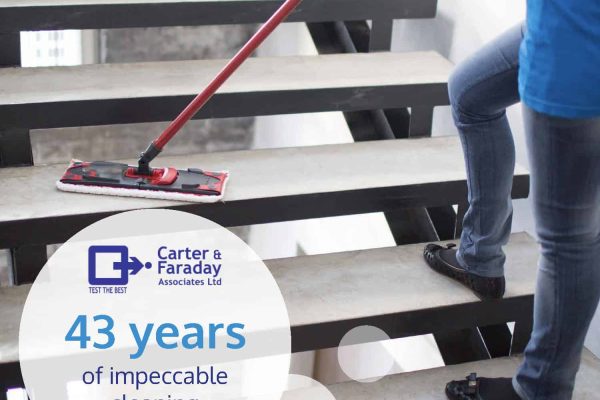
In buildings without lifts, stairwells bear the highest footfall of any internal surface. Hard floors need mopping and scrubbing, handrails need disinfecting, and corners and skirting boards require regular attention to prevent the gradual buildup of grime that becomes very visible very quickly. - Lifts
Lift interiors are high-touch, high-footfall environments with limited air circulation. Walls, floors, mirrors, and control panels all require regular communal cleaning with appropriate disinfectants, not just a surface wipe. - Bin stores and refuse areas
Bin stores are one of the most neglected areas in any residential block and one of the most significant sources of odour and pest attraction. Professional communal area cleaning services include bin store management: floors hosed and scrubbed, walls wiped down, and surfaces treated to prevent odour and bacterial growth. - Laundry rooms and communal kitchen
Sheltered housing and some private blocks include shared laundry or kitchen facilities. These require the same standard of deep cleaning as any commercial kitchen environment, with particular attention to appliance surfaces, grout lines, and drainage. - Car parks and external areas
Covered car parks, cycle stores, and external pathways form part of the communal footprint and require sweeping, litter removal, and periodic pressure washing.
For larger developments, a residential development cleaning services programme will be structured around a cleaning schedule specific to the building, with different areas cleaned at different frequencies based on footfall and use.

Who Is Legally Responsible for Communal Area Cleaning?
This is one of the most common questions from both residents and property managers, and the answer is clear under UK law.
Housing associations operating social housing portfolios are regulated bodies, and the maintenance of communal areas to a decent standard is a condition of their regulatory obligations under the Social Housing Regulator’s Consumer Standards. Failure to maintain clean and safe communal areas can result in formal engagement with the regulator and referrals to the Housing Ombudsman, which upholds the right of residents to make complaints about standards that are not resolved at a local level.
Private landlords and managing agents managing leasehold blocks operate under the Landlord and Tenant Act 1985, which requires landlords to maintain the structure and exterior of a building, including shared facilities. The interpretation of this duty by the courts has consistently included communal areas. The Fire Safety Act 2021 added a further layer of obligation: communal stairwells, lobbies, and escape routes must be kept clear and in a state of good repair, which encompasses cleanliness of surfaces and flooring.
In both cases, the practical implication is the same: housing association cleaning and communal area maintenance must be properly contracted, documented, and consistently delivered. A documented cleaning log is important evidence if a complaint is made to the Housing Ombudsman, and an absence of records typically counts against the landlord or housing association in any formal review.
Professional housing association cleaning services should include routine reporting, cleaning logs, and a clear escalation process for issues identified during a visit.
How Often Should Communal Areas Be Cleaned?
The right frequency for a communal cleaning service depends on the size of the building, the number of residents, and the type of facilities provided. As a general guide:
High-frequency cleaning (daily or multiple times per week) is appropriate for blocks with more than 20 units, buildings with lifts, any development with a sheltered housing or supported living component, and properties with a higher-than-average turnover of residents or visitors. At this frequency, entrance lobbies, lifts, and bin stores are prioritised alongside stairwell mopping.
Weekly cleaning is the baseline standard for most medium-sized residential blocks. A proper weekly visit covers all hallways and stairwells, lifts, bin stores, glass and lobby areas, and any shared laundry or communal rooms. For blocks that we cover in Crawley, Horsham, Guildford, Reigate, and Redhill, a weekly visit programme is a standard starting point for any communal area cleaning contract.
Fortnightly cleaning may be appropriate for smaller blocks of fewer than eight to ten units with low footfall, though this should always be supplemented by periodic deep cleans to address what routine visits cannot reach.
Periodic deep cleaning should be scheduled at least twice a year regardless of the routine frequency. Deep cleans address grout, stairwell corners, high-level surfaces, bin store walls, and lift interiors at a level that a maintenance clean cannot replicate.
Carter & Faraday’s housing association services include both routine communal area cleaning programmes to support tenancy transitions.
What Sets Professional Housing Association Cleaning Services Apart?
Not all communal area cleaners are set up to work within the operational and compliance requirements of housing associations and property managers. The differences that matter most in practice:
- Reliability and continuity
Housing association contracts require a consistent presence on a fixed schedule. Missed visits or irregular attendance are one of the most common sources of resident complaints. A professional contractor with the staffing depth to cover sickness, holidays, and absences without impacting the schedule is essential. - Documentation and audit trail
As noted above, cleaning logs are not optional. Every visit should be recorded, with notes on any issues identified on site. This documentation protects both the housing association and the managing agent if a complaint is escalated. - Appropriate products and accreditations
Block cleaning in a residential setting requires products appropriate for use around residents, including children and elderly occupants. Bactericidal and virucidal disinfectants are used on high-touch surfaces; low-VOC products are preferred in enclosed areas such as stairwells and lifts. Contractors should hold appropriate public liability insurance and be able to provide COSHH records on request. - Flexibility and responsiveness
Bin stores and communal areas do not always deteriorate on a schedule. Professional housing association cleaning services should include a clear process for reactive requests, whether that is an emergency bin store clean after a collection failure or a one-off visit to address vandalism or deliberate soiling. - DBS-checked operatives
For any scheme with a sheltered housing or supported living element, all cleaning operatives working on site should hold a current DBS check. This is a standard requirement from housing associations with vulnerable resident populations.

Carter & Faraday: Communal Area Cleaning Services Across Sussex & Surrey
Carter & Faraday Associates have been providing communal area cleaning and housing association cleaning services to residential developments across Sussex, Surrey, Kent, and South London since 1978. We work with housing associations, private managing agents, and residential developers across a wide range of schemes: from small blocks in Horsham and Reigate to larger mixed-tenure developments in Crawley and Guildford.
Our residential development cleaning services cover the full scope: regular communal maintenance, periodic deep cleans, window cleaning for external glazing and communal areas, and carpet and floor cleaning for high-footfall hallways and stairwells.
All operatives are DBS-checked where required. We provide cleaning logs and visit records as standard. We carry full public liability insurance and are accredited to ISO 9001 and ISO 14001, giving housing associations and managing agents the documentation they need for compliance and audit purposes.
Whether you are looking for a communal cleaning service for a single block or a framework contract across a larger portfolio, we would be glad to discuss what the right programme looks like for your development.
Get in touch with Carter & Faraday today
We also provide commercial window cleaning and carpet and floor cleaning as part of a full communal maintenance package.
Contact us or call us on 01444 482 666. We have been looking after residential and commercial properties across the South East for over 45 years.