
The floors in a commercial building take more punishment than almost any other surface. Every person who walks through the door brings dirt, moisture, grit, and debris with them, and over days and weeks, that builds up in ways that routine sweeping and mopping cannot fully address.
Commercial floor cleaning is not the same as wiping down a hard floor at the end of a working day. It is a systematic, professional process that restores the condition of commercial flooring, extends its working life, and maintains the standards that clients, staff, and building inspectors expect to see.
This guide covers what commercial floor cleaning actually involves, which floor types need professional attention, and how often your premises should be on a professional cleaning schedule.
What Does Commercial Floor Cleaning Actually Involve?
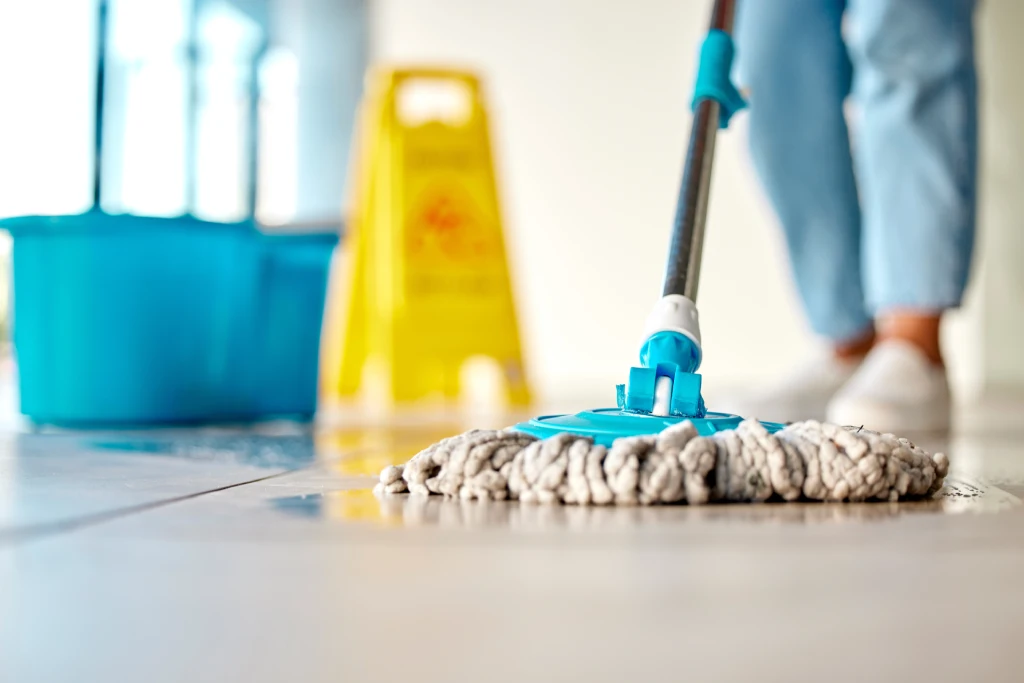
Commercial floor cleaning services go considerably further than the daily maintenance a cleaning team carries out. Where routine cleaning removes surface debris and keeps floors presentable, professional floor cleaning addresses what accumulates beneath the surface level: ingrained dirt, scuff marks, chemical residue, and the gradual degradation of floor finishes that routine mopping cannot reverse.
A professional commercial floor cleaning visit typically involves:
- Strip and seal for vinyl and linoleum floors: removing old polish and sealant layers, cleaning back to the base material, and applying fresh coats to restore slip resistance and appearance.
- Scrubbing and buffing for hard floors: machine scrubbing to lift ingrained dirt, followed by buffing to restore the finish.
- Steam cleaning for tile and grout: high-temperature treatment that removes bacteria and staining from grout lines that standard cleaning cannot reach.
- Burnishing for polished concrete, stone, and high-gloss floors: restoring surface sheen and protective finish.
- Deep cleaning of drainage channels in commercial kitchen and wet-area floors.
The equipment used by professional floor cleaners, rotary scrubbers, ride-on cleaning machines, industrial wet vacuums , is not available for routine cleaning and operates at a different level of thoroughness to manual methods.
How Do You Clean Commercial Floors?
The method depends entirely on the floor type. Using the wrong cleaning approach on a commercial floor can permanently damage the surface, stripping sealant from vinyl, dulling polished stone, or lifting safety flooring adhesive.
Vinyl and linoleum: these are among the most common commercial floor surfaces and require a strip-and-seal process periodically alongside regular mopping. The frequency of professional treatment depends on footfall. A busy retail or healthcare environment may need stripping and resealing quarterly; a lower-traffic office space can often go six months between professional visits. Commercial floor cleaning services for vinyl should always use pH-neutral detergents on a daily basis between professional visits to avoid accelerating wear on the sealant layer.
Ceramic and porcelain tile: regular mopping maintains the tile surface, but grout lines accumulate contamination that standard cleaning cannot address. Professional hard floor cleaning services use machine scrubbing with specialist detergents followed by grout sealing to prevent future staining.
Stone and terrazzo: marble, limestone, slate and terrazzo all require specialist treatment. Acidic cleaning products, even mildly acidic ones, etch the surface of natural stone permanently. Professional floor cleaners working with stone will use alkaline or pH-neutral products only, along with diamond-pad polishing to restore the surface after deep cleaning.
Polished concrete: increasingly common in commercial and industrial spaces, polished concrete needs periodic burnishing and the application of a penetrating sealer to maintain its appearance and prevent dusting.
Safety flooring: the textured surface of safety flooring traps dirt in a way that smooth floors do not. Machine scrubbing with appropriate chemical treatments is required to maintain both hygiene standards and the slip-resistance properties the flooring was installed to provide.
What Types of Flooring Need Professional Cleaning?
Almost all commercial floor types benefit from periodic professional cleaning, but some require it more urgently than others.
High-traffic hard floors, vinyl, tile, and polished concrete in offices, schools, care homes, retail spaces, and healthcare premises show wear and contamination faster than lower-traffic areas and need professional attention most frequently.
Wet-area floors in commercial kitchens, washrooms, and changing areas accumulate grease, limescale, and biological contamination that routine cleaning does not eliminate. Industrial floor cleaning services for kitchens and wet areas typically include drainage cleaning and the application of non-slip treatments as part of the same visit.
Specialist surfaces including natural stone, terrazzo, and polished concrete need professional cleaning simply because the wrong product or method can cause irreversible damage. The cost of restoring a poorly maintained stone floor far exceeds the cost of maintaining it correctly from the outset.
For soft flooring, carpet and upholstery, professional carpet cleaning is a separate service. If your premises have a mix of hard and soft floor surfaces, a contractor offering both commercial floor cleaning and carpet cleaning can manage the whole building under a single contract.
How Often Should Commercial Floors Be Professionally Cleaned?
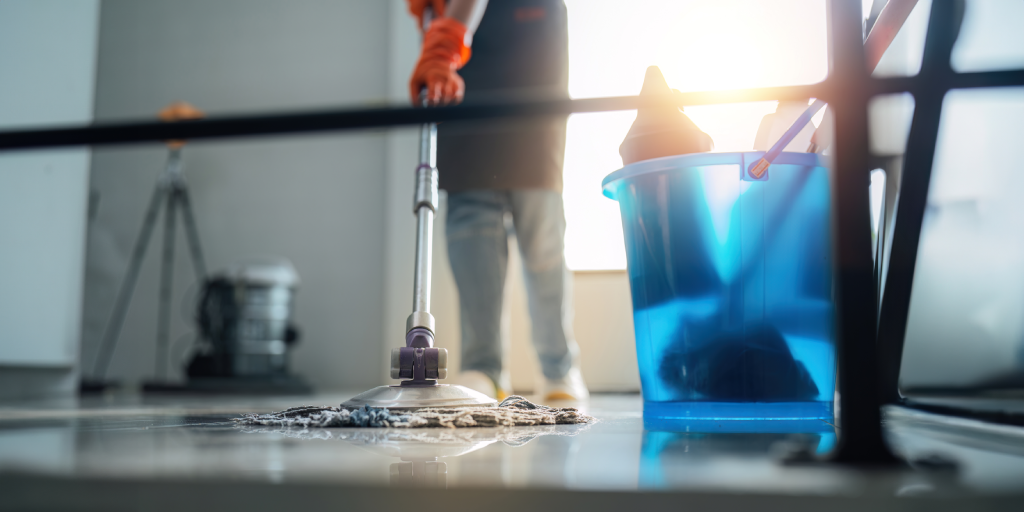
Frequency depends on four factors: the floor type, the level of footfall, the sector the building operates in, and the standard of daily maintenance between professional visits.
As a practical guide:
- High-footfall retail, healthcare, and education premises: quarterly professional clean as a minimum, with some surfaces (kitchen floors, wet areas) requiring monthly attention.
- Standard commercial offices: bi-annual professional clean alongside daily routine maintenance.
- Industrial and warehouse floors: varies significantly by operation, but a minimum of twice a year for general floor areas, with more frequent treatment of high-wear zones.
- Communal areas in residential blocks: quarterly is standard for well-managed properties, with additional visits following seasonal increases in footfall and wet weather.
For office floor cleaning in particular, the transition from summer to autumn is one of the most important times to schedule a professional visit. Increased footfall, wet weather, and the return of staff after summer bring significantly more dirt and moisture into buildings, accelerating wear on floor surfaces and sealant layers.
Commercial floor maintenance planned in advance, built into a cleaning contract rather than booked reactively, is always more cost-effective than emergency treatments or premature floor replacement caused by neglect.
Commercial Floor Cleaning Across Sussex and Surrey
Carter and Faraday provides commercial floor cleaning services and industrial floor cleaning across East Sussex, West Sussex, and Surrey, including Brighton, Crawley, Guildford, and the surrounding areas.
Our commercial floor cleaning contracts are built around your specific floor types, your footfall levels, and your operational requirements. We carry out a free site survey before quoting so the service and frequency are matched to your building rather than based on a generic rate.
Whether you need a one-off professional clean or a regular commercial floor maintenance contract, get in touch to arrange your survey.
Call us on 01444 482 666 or email sales@carterandfaraday.co.uk.